


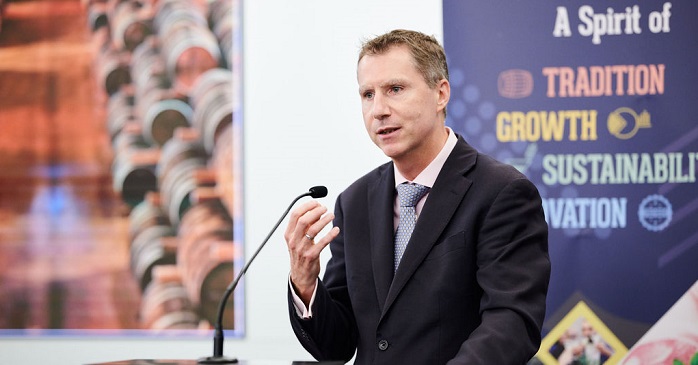
The Annual spirits Summit which took place on 19 November was a very special moment for me. Not only was it my first Summit as Director General of spiritsEUROPE, but it was also the occasion to present the inaugural United in Moderation Awards – a new flagship initiative that, I believe, captures the very best of what our sector stands for. The Summit brought together policymakers, stakeholders, students, and colleagues from across Europe for a timely and constructive conversation about the future of our sector. The Summit provided valuable insights into how we can strengthen our contribution to society while navigating an increasingly complex policy environment.
One of the clearest messages emerging from the Summit was the need to maintain a balanced, evidence-based approach to alcohol policy. Listening to many of the participants, it was clear for them that the most effective way to reduce harm is not through sweeping restrictions such as advertising bans or tax increases, but through targeted, proportionate interventions that focus on risky behaviours rather than penalising the vast majority of people who drink responsibly. This philosophy was illustrated during the United in Moderation Awards. The students showed how they would engage their peers to reflect on their consumption, empowering them to adopt a responsible drinking behaviour. As I underlined during the ceremony, when young adults take the lead, prevention becomes far more credible and impactful. Their work confirmed the importance of engaging youth voices in shaping prevention priorities – not as a token gesture, but as an essential element of a modern, effective public-health strategy.
The Summit also provided an important platform to address the broader regulatory and economic environment in which our sector operates. A recurring theme was the continued fragility of the EU Internal Market. Despite its enormous success, it remains incomplete and, as ECB President Christine Lagarde has urged, we need to dismantle the internal trade barriers and “self inflicted tariffs” that stifle innovation, productivity and competitiveness and that hold Europe back. Ms. Lagarde is right to call out the tendency to “sugarcoat, gold-plate and do just a bit more” when it comes to the national implementation of EU regulation and this needs to be avoided at all costs.
Trade was another key focus of discussion. With negotiations progressing with partners such as Mercosur, India and several Asian countries, the EU has a real opportunity to open new avenues for growth. But we were also clear that large established markets such as the United States and China remain indispensable, and that restoring zero-for-zero tariffs for spirits across the Atlantic must remain a strategic priority. Market access work requires persistence: it can take up to a decade for producers to fully establish themselves in a new market, which is why swift ratification and implementation of Free Trade Agreements and the removal of non-tariff barriers is so important. People often forget that the spirits sector has deep roots in agriculture and our rural communities and it is here that the impact of significant interruptions to our exports can be most keenly felt.
Our discussions also touched on the global health agenda. The recent UN Political Declaration on Non-Communicable Diseases, which focuses on reducing harmful consumption rather than restricting all consumption, is a welcome step. It aligns with the “whole-of-society” approach we champion – one where public authorities, academia, civil society and industry each have a role to play. This is exactly the spirit we saw reflected in the United in Moderation initiative and in the many responsible-drinking campaigns our members deliver across Europe.
The Summit showed that we have both the ambition and the credibility to contribute meaningfully to Europe’s economic, social and public-health agendas. I am encouraged by the clarity of the discussions, the engagement of policymakers, and the creativity displayed by the students who joined us.
I look forward to working with all of you as we turn the insights from the Summit into concrete progress for our sector and for society.
Mark Titterington, Director General*
*In his capacity as permanent representative of Sunnega Consulting